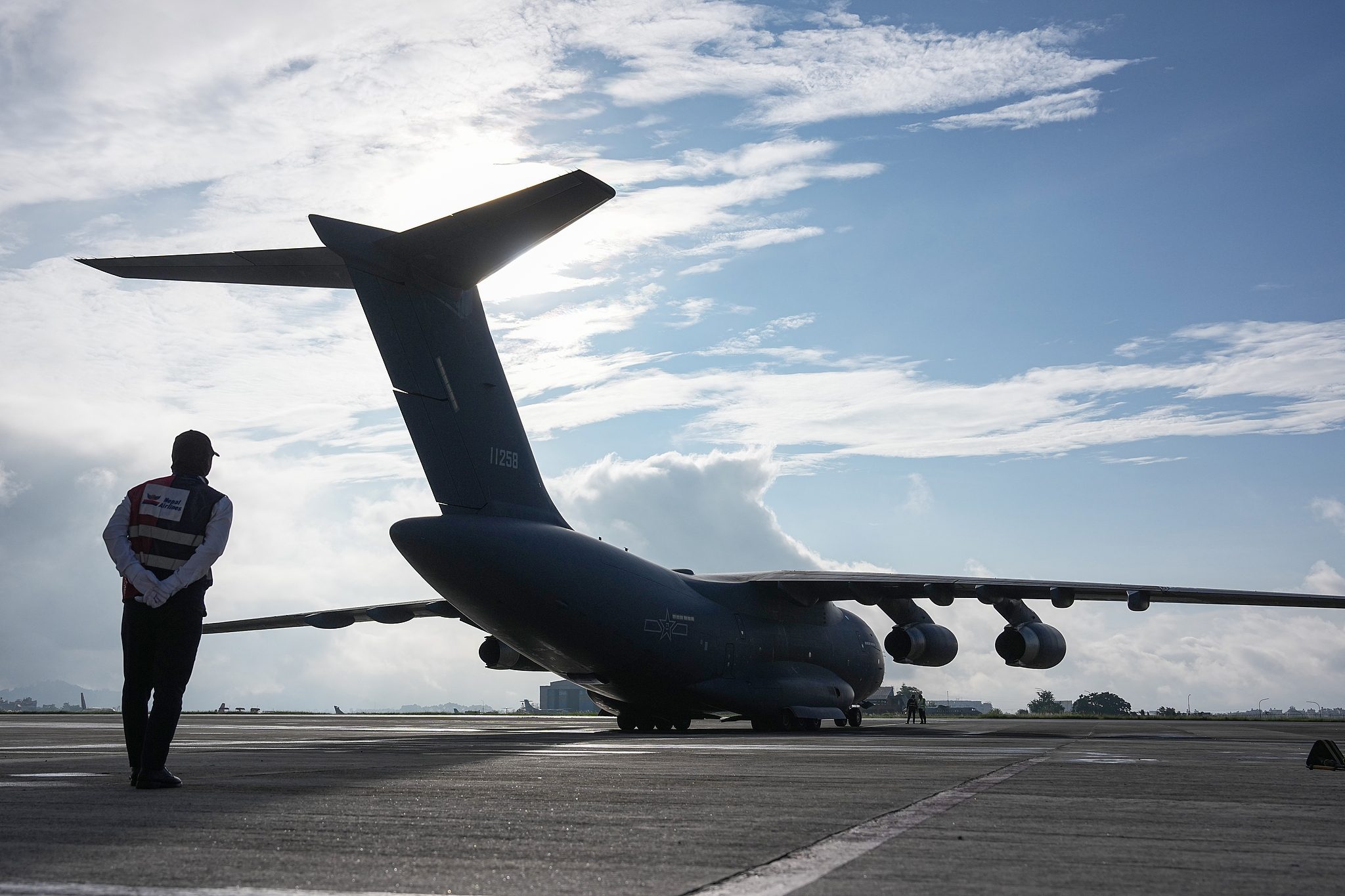
China has sent a second batch of emergency humanitarian assistance to Nepal along with a team of DNA identification specialists as search, rescue and victim identification efforts continue following the devastating flood and mudslide disaster of August 26.

A Chinese Air Force Y-20 large transport aircraft carrying the emergency supplies landed at Tribhuvan International Airport in Kathmandu at around 5:30 p.m. on Tuesday, September 1. The shipment was prepared based on Nepal’s immediate needs and included drones, DNA testing instruments and reagents, water-purification equipment and lighting devices.
Five Chinese DNA identification specialists arrived on the same flight. They form the third team of Chinese aid experts deployed to Nepal following the disaster and were scheduled to proceed directly to the affected areas to assist Nepali authorities in identifying victims and supporting ongoing relief operations.
The arrival of the latest assistance comes as Nepal continues to grapple with the enormous human and physical toll of the disaster. According to figures released by Nepali authorities on Tuesday, the death toll from the massive mudslide had reached 1,068, while 4,606 people were still reported missing.
The disaster, which struck on August 26, caused extensive destruction across flood-affected areas, with damaged roads, bridges and other infrastructure severely complicating access to some of the hardest-hit locations. The scale of destruction has also made the identification of recovered bodies an urgent challenge, increasing the importance of specialized forensic assistance.
China’s latest support therefore focuses not only on conventional relief but also on technology-assisted search and victim identification. Drones can assist rescue teams in surveying difficult and inaccessible terrain, while DNA testing equipment and reagents can help authorities establish the identities of victims whose remains cannot be identified through conventional means. Water-purification and lighting equipment are intended to support emergency operations in areas where basic infrastructure has been damaged.
The Chinese Embassy in Nepal said the assistance was arranged according to Nepal’s actual requirements and reflected China’s continued support for Nepal’s rescue and relief efforts. Chinese Ambassador Zhang Maoming and Nepal’s Minister for Science, Technology and Innovation Mahabir Pun attended the handover ceremony at Tribhuvan International Airport and welcomed the Chinese expert team.
The latest shipment follows China’s first batch of emergency relief supplies, which arrived in Nepal on August 30. According to Chinese and Nepali official sources, the latest Y-20 flight represents a further expansion of China’s emergency assistance as Nepal seeks specialized equipment and expertise for the continuing search and rescue operation.
China has also begun preparing a third batch of emergency supplies in response to Nepal’s requirements. The planned assistance includes Bailey bridges, body freezers, epidemic-prevention materials and emergency communication equipment, according to China’s Foreign Ministry.
The decision to deploy DNA specialists is particularly significant given the number of people still missing and the difficulties authorities face in identifying recovered remains. Nepali authorities have been seeking DNA samples and other identifying information from families as part of efforts to establish the identities of victims. International media have reported that hundreds of foreign nationals are also among those missing following the disaster.
China’s assistance comes as rescue teams from Nepal and several international partners continue operations in the disaster-hit areas. Access remains difficult in some locations because of damaged infrastructure, debris and unstable terrain. Reuters reported that helicopters, excavators and temporary access routes are being used to reach isolated areas, while hundreds of people remain the focus of ongoing search and rescue operations.
The August 26 disaster has developed into one of Nepal’s most severe recent humanitarian emergencies, leaving communities devastated and creating enormous challenges for rescue, relief, victim identification and eventual reconstruction. Against this backdrop, the arrival of China’s second emergency shipment and specialized DNA team is expected to provide additional technical capacity to Nepal’s ongoing response.
As search and rescue operations continue, authorities face the dual challenge of reaching those still missing and ensuring that recovered victims are identified and returned to their families. The latest Chinese assistance, particularly the combination of drones, forensic DNA technology, water-purification systems and emergency lighting equipment, is expected to strengthen those efforts at a critical stage of the disaster response.