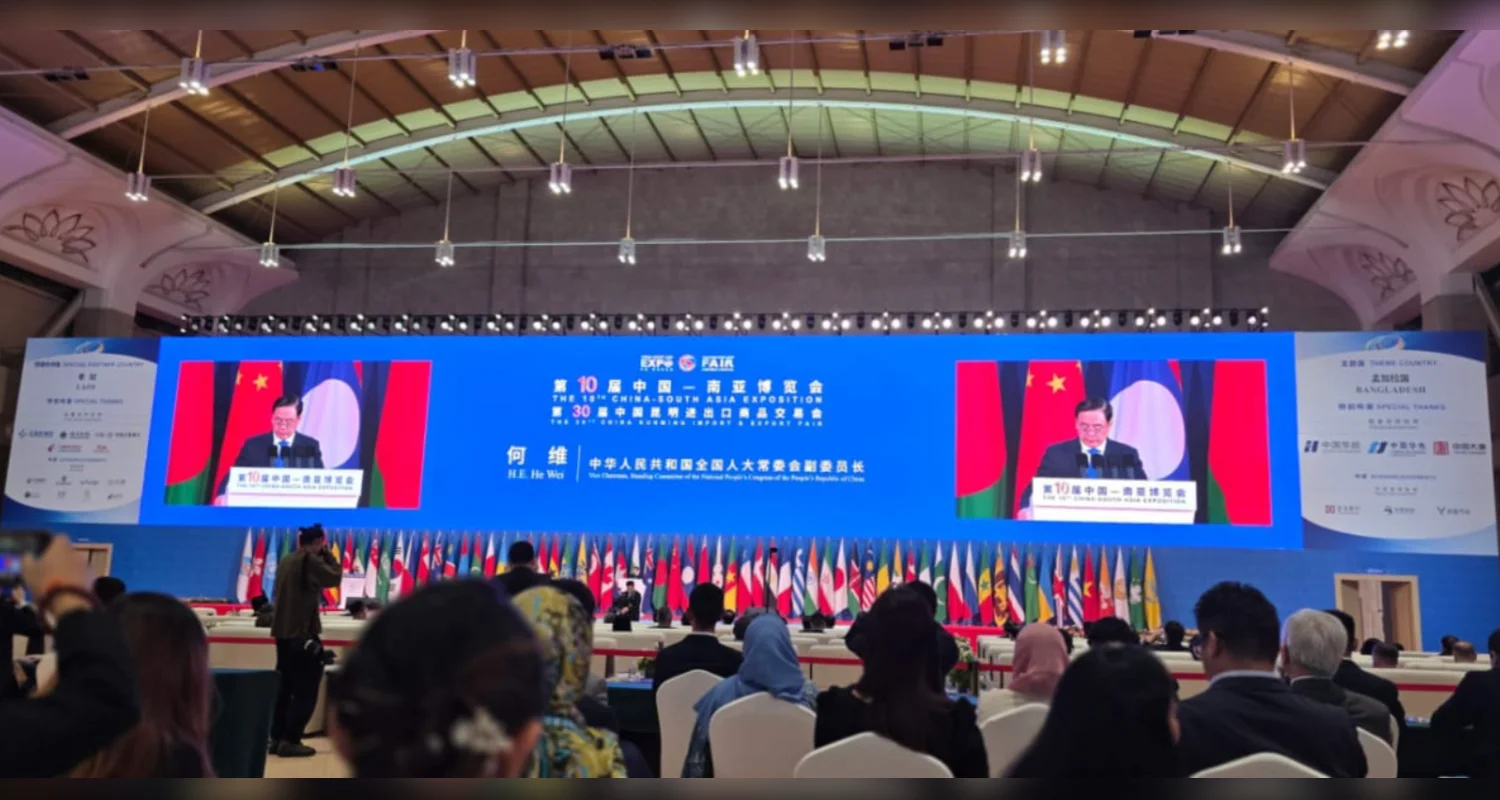
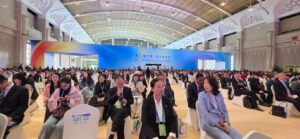
When Kunming’s exhibition halls fill up this week, they do so not simply as a trade fair but as a barometer of how profoundly Asia’s economic centre of gravity has shifted. The 10th China-South Asia Expo running from June 11 to 16 in Yunnan’s capital is the most expansive edition yet of a platform that grew from a modest commodity fair nineteen years ago into a national-level gateway connecting South and Southeast Asia to the world’s second-largest economy.

The numbers alone tell a striking story. Bilateral trade between China and South Asian countries has more than tripled since 2007, crossing the $200 billion threshold for the first time in 2025. In the first four months of this year, trade grew 15.8 per cent year-on-year, with China’s imports from South Asia expanding far faster than its exports – a reversal that reflects the Expo’s original purpose: giving South Asian producers meaningful access to the Chinese market. Over 2,300 enterprises from 68 countries, regions, and international organisations are participating this year. Overseas enterprises account for 42 percent of exhibitors. More than 1,500 professional buyers have registered, over 60 per cent of them from abroad, a 67 percent jump on last year and 45 countries, including Germany, Brazil, Peru, and Türkiye, are sending purchasing delegations for the first time.
A Platform Built on a Shared Aspiration
The Expo’s theme this year – “Unity and Cooperation for Common Development” is not incidental. It distils a vision that Chinese leadership has repeatedly articulated: that China and South Asian countries are, in the words of a congratulatory letter to the China-South Asia Forum, “friendly neighbors and development partners, and a community with a shared future that shares weal and woe.” The Expo was conceived as a structural response to South Asian concerns about export access, and its growth into a platform covering green energy, digital trade, healthcare, culture, and agribusiness reflects how that original mandate has widened.
For the first time in the event’s history, all 31 Chinese provinces, autonomous regions, and municipalities are represented under one roof, alongside the Xinjiang Production and Construction Corps and five cities with independent planning status. The Expo has also, for the first time, linked up with major international trade events, the Digital Trade Expo and the Canton Fair to share buyer networks, a sign that it is beginning to integrate into the broader architecture of global commerce rather than sitting apart from it.

Bangladesh Steps Forward, Nepal Tells Its Story
Bangladesh occupies the most prominent guest position this year as the Country of Honor. Its showcase anchors the South Asia Pavilion with a carefully curated range of geographical indication products -Jamdani sarees, Hilsa fish, and Bogra yogurt alongside two pharmaceutical firms engaging Chinese buyers. The Bangladesh-China Chamber of Commerce and Industry, the only bilateral joint chamber between the two countries, is present as a gateway for enterprises considering investment in Bangladesh.
The centrepiece of the Bangladesh display is Aarong, one of the country’s most iconic homegrown brands. Founded in 1978, Aarong holds a Guinness World Record as the world’s largest crafts store and is making its China debut at this Expo with specially customised display equipment, bringing masterpieces of clothing, homeware, and jewellery to a new market. For a brand built on fair-trade principles and artisan livelihoods, the South Asia Expo represents not just a commercial opening but a statement of cultural confidence.
Pakistan, meanwhile, marks the 75th anniversary of China-Pakistan diplomatic relations with a ribbon-cutting ceremony in Hall 8, a moment that carries more symbolic weight than most ribbon-cuttings tend to. Sri Lanka enriches the variety of exhibits with local seafood products, further broadening the range available to professional buyers. And in a moment loaded with quiet significance, the Democratic People’s Republic of Korea sends a 53-person delegation, its first appearance at the Expo in many years showcasing ethnic crafts, food, and cultural goods, adding an unexpected dimension to the week’s people-to-people exchanges.
From Nepal comes one of the Expo’s more quietly compelling stories. Angel Hands presents handmade Pashmina shawls whose raw wool comes from Himalayan goats grazing at altitudes above 4,000 metres. The brand’s founder, Shankar Koirala, has used Expo platforms over the years to register a company in Shanghai and partner with fair-trade organisations to deliver skills training for women in impoverished rural communities. It is a small story in the context of $200 billion in bilateral trade, but it is the kind of story that explains why the Expo exists at all.
The Maldives Industrial Fisheries Company, the archipelago’s first state-owned fisheries marketing agency joins hands with local partners to trace the full tuna chain from the Indian Ocean to the table, letting Chinese consumers access deep-ocean catches with full provenance data. Taken together, the South Asia Pavilion’s 550-plus enterprises from all eight South Asian nations offer a picture of a region that is no longer merely attending an expo but learning to use it.
Europe, the Middle East, and the Wider World
The Expo’s Overseas Pavilion hosting 210 enterprises from 38 countries offers a reminder that this is not a purely regional event. For the first time, embassies and consulates of seven countries, including Italy, Uruguay, and Australia, are presenting national pavilions.
France’s Luyi Group arrives with a winemaking history stretching back 300 years, its Vaudin series having once supplied European royal courts. On-site blind-tasting events and French wine lessons give the pavilion a social energy beyond the transactional. Hungary brings Tokaji Aszú – immortalised in the Hungarian national anthem and a recognised World Geographical Indication product to the Expo floor for the first time. Iran occupies 18 exhibition spaces; an influencer couple who overcame regional conflict to return to Kunming as promised presents Persian rugs and enamel crafts, offering a quiet counternarrative to geopolitical noise and a reminder that grassroots economic ties have their own logic.
Yunnan’s Industrial Ambitions
The Expo is also a showcase for Yunnan’s own industrial transformation, and the province does not underplay the moment. The Green Energy Pavilion gathers seven Fortune Global 500 companies – China Huadian, China Datang, China Southern Power Grid, China Resources, China Energy Investment Corporation, CNPC, and Sinopec, alongside eleven industry leaders. Nearly 25 projects are expected to be signed during the Expo, focused on green power development, energy storage, and cross-border energy cooperation, with a total contract value anticipated to exceed 28 billion yuan.
CGN’s exhibit is particularly illustrative of where Yunnan’s energy ambitions intersect with the region’s development needs. In Laos, CGN has built Southeast Asia’s largest single photovoltaic project, enabling China-Laos power connectivity. In Yunnan, it has established over 20,000 mu of farming bases beneath solar panels, helping more than 1,400 farming households increase their annual income by over 15 million yuan collectively. The green energy story, at its best, is also a rural livelihoods story.
In manufacturing, Yunnan Aluminum’s green aluminum products have obtained carbon footprint certification, making them competitive in the EU’s Carbon Border Adjustment Mechanism market, a significant commercial credential in a world where supply chain emissions are increasingly scrutinised. Weiqiao Automotive Technology presents a full chain from bauxite to complete vehicles, with its Ruixiang M8 MPV and new-energy battery enclosures made of high-strength aluminum attracting interest from regional buyers. The company has already relocated nearly 800,000 tonnes of electrolytic aluminum production capacity to Yunnan, with an expected output value of 13.2 billion yuan this year.
Xinlian Environmental Protection demonstrates a full-cycle circular chain that extracts zinc and indium from steel dust and smelting slag to produce high-end optoelectronic materials, a model of green manufacturing that turns industrial waste into export-ready advanced materials. Yunnan Tin, under the theme “AI Empowers Digital Yunnan Tin,” uses smart dioramas and glasses-free 3D displays to make the case for high-end tin-indium products in the regional market.
Coffee, Culture, and the Slow Business of Brand-Building
The Coffee Industry Pavilion deserves special mention. As the Expo’s only single-category professional hall, it brings together more than 160 enterprises from eight countries, China, Burundi, Uganda, Kenya, Ethiopia, and others — as well as 15 Chinese provinces, covering the entire chain from seed to cup. Three national-level competitions run concurrently: the 2026 China Coffee Brewing Championship, the Cup Tasters Championship, and the CCT National Coffee Tasters Competition, alongside over 40 tasting sessions, forums, and barista performances.
The Nujiang zone innovatively combines high-altitude specialty coffee beans with displays of Dulong ethnic brocade and a tasting bar for unusual blends, cardamom and ham paired with coffee in a composite scene integrating culture, heritage, and trade. The Pu’er zone, positioning itself as the “Coffee Capital,” showcases the entire industry chain from fine varieties and deep processing to coffee estate tourism and barista training. JD Logistics, meanwhile, presents an integrated supply chain solution covering drone delivery for the “first mile,” nationwide temperature-controlled warehouses, and traceability via unique product codes, the logistics infrastructure that turns artisan coffee into scalable commerce.
The Culture, Tourism and Sports Pavilion turns inward to Yunnan’s own identity, with 77 performances, over 30 intangible cultural heritage items, and six experiential scenes built around themes such as “Living in Yunnan” and “Tasting Yunnan.” A recreated traditional coffee house and Yunnan tea snack shop sit alongside VR wingsuit flying and rock climbing simulators in a pavilion that is trying, deliberately, to make Yunnan itself a destination rather than merely a host.
The Myanmar Jade Auction: A Historic First
Of all this year’s firsts, the Myanmar Jade Auction carries the most historical freight. Housed in Hall 7, it offers over 100 pieces of rough jade and finished jewellery from 18 enterprises. This is the first time in more than 60 years that Myanmar has held a jade auction outside its own territory, a milestone made possible by a memorandum signed between the Yunnan Provincial Government and Myanmar’s Ministry of Natural Resources in February 2026. Core trading rules and membership registration systems are being released on-site for the first time, creating infrastructure that could outlast the Expo week itself.
Making Connections That Last
A recurring theme this year is precision over spectacle. Under a “one country, one strategy” framework, organisers have designed 20 targeted supply-demand matchmaking events covering 11 industries, with country-specific sessions for eight South Asian nations as well as Cambodia and Laos. A dedicated Sourcing and Matchmaking Centre in the South Asia Pavilion operates on a “buyers seated, suppliers rotating” model, with bilingual interpretation, advance-prepared matchmaking lists, and policy handbooks. Twenty-seven industry associations and overseas business representative offices provide a closed loop from pre-Expo scoping to post-Expo follow-up.
An inspection guide covering six key industries and over 200 high-quality sites — with six tailored research routes allowing buyers to visit coffee estates, green aluminum industrial parks, and the Mohan port signals an effort to extend the Expo’s reach beyond the exhibition floor and into the supply chain itself.
A Worry-Free Trade Service Platform, staffed by officials from four government agencies – commerce, customs, taxation, and justice, alongside 20 professional institutions, offers one-stop support including customs declaration, cross-border finance, international logistics, and foreign-related legal advice. In the cross-border live-streaming zone, local influencers fluent in Burmese and Thai are broadcasting Expo products directly to overseas audiences in real time, a small but telling detail about how the mechanics of trade promotion have changed.
The Expo also hosts, for the first time, the International Public Procurement Conference for the South Asian Market and the China (Yunnan), South Asia & Southeast Asia Cross-border E-commerce Matchmaking Event, adding institutional weight to what might otherwise remain informal connections.
A Platform Coming of Age
Over ten editions, the China-South Asia Expo has evolved from a commodity fair responding to South Asian export concerns into a multilateral platform that increasingly resembles a small world economy in miniature with its own finance windows, legal services, matchmaking infrastructure, live-streaming commerce, and on-site agricultural inspection routes. The Service Trade Pavilion alone encompasses low-altitude drone systems, AI robots, cross-border finance, e-sports, and digital silk road e-commerce platforms, a range that would have been unrecognisable at the Expo’s founding.
The questions that now surround it are the questions of maturity: whether the deals signed here translate into durable supply chains, whether the buyer networks built across nine previous sessions deepen rather than simply recycle, and whether the platform’s stated ambitions for “common development” are matched by the specifics of what gets traded, on what terms, and with what lasting benefit to the smaller and more vulnerable economies in the room.
For now, Kunming is alive with the noise of negotiations conducted in a dozen languages, cups of Yunnan coffee passed between producers and buyers, Pashmina examined under careful hands, and jade held up to the light. The Expo runs until June 16.